
We are proud to announce a new series of short films as part of our Queer Lens program – screening at the 2024 Arab Film Festival. Queer Lens: The Ties That Bind will screen on October 29th at Google’s Community Space in San Francisco and will also be available for online streaming. You can get your tickets here.
Queer Lens is an annual program at the Arab Film Festival featuring films, discussions and events centering the stories of LGBTQ+ people in the Arab world and the diaspora. Queer Lens celebrates the many dimensions and expressions of Arab queerness in stories and on the screen.
This year’s Queer Lens program at the 28th Arab Film Festival includes one narrative feature film – Layla by Amrou Al-Kadhi – and a selection of short films, all of which explore connection and community building.
We wrote about Layla here, now let’s dive into the short films selection screening at AFF2024.
Psst: You can also browse the full festival schedule and buy a festival pass.

Queer Lens: The Ties That Bind
This year’s Queer Lens shorts program highlights the importance of relationships and community building for young LGBTQ+ Arabs. Featuring a diverse set of award-winning shorts from the Levant, North Africa, and the diaspora, each of these films contend with what it means to find yourself through forming connections with others. The filmmakers explore how Queer Arab youth seek out one another across space and time: by connecting across countries, finding solace in older generations, or through exploring hidden queer narratives in Arab history. Despite the obstacles of social stigma, physical distance, and historical distortion, Queer Arabs remain steadfast in their efforts to establish a community of acceptance and understanding with and for each other
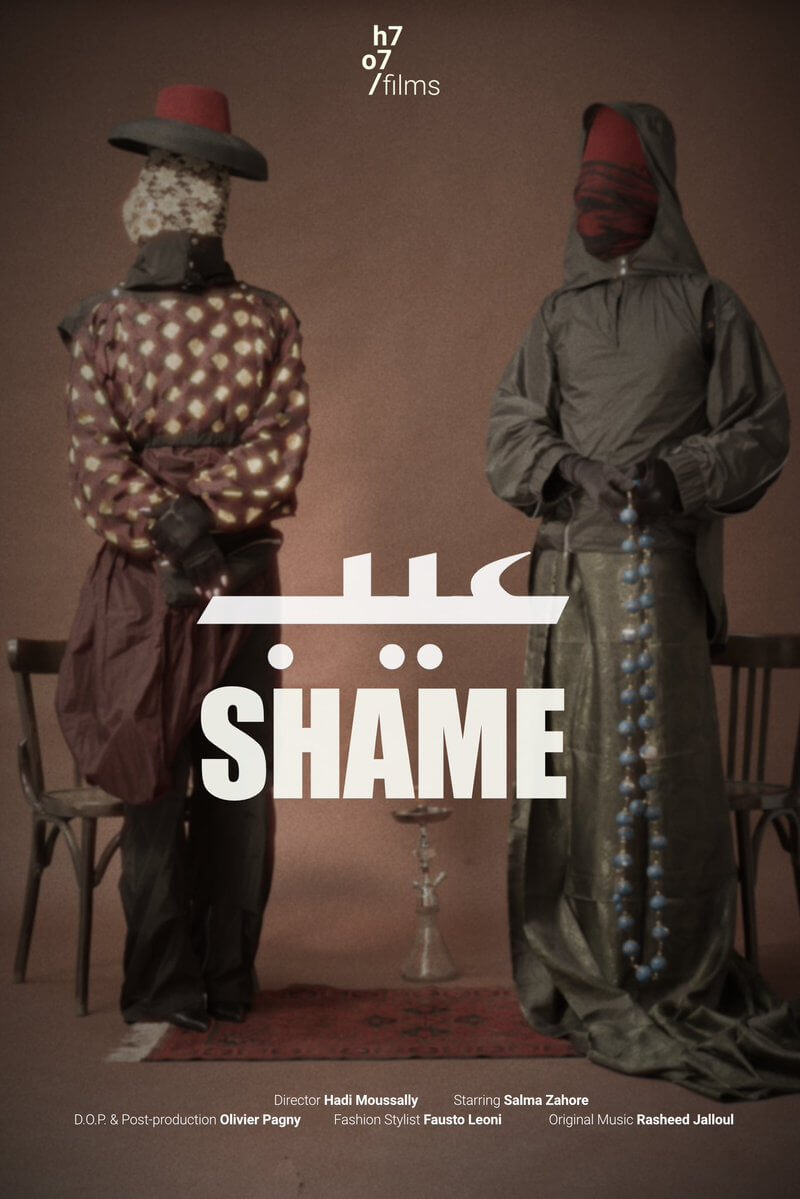
Shame directed by Hadi Moussally
Narrative Short – 5 min – Lebanon, Spain
In the 19th century, in the Levant region, Salma Zahore, along with her parents and neighbors, participated in a photoshoot using a long exposure technique. At the end of it, Salma decided to take off her coat, revealing her body. Unaware of the chaos this gesture could cause within her circle, she did not know it could lead to shame (عيب).
About the director, Hadi Moussally
Hadi Moussally is a Lebanese-French filmmaker. He acquires a first master’s degree in “Fiction Cinema” then a second one in “Documentary and Anthropological Cinema” in Paris universities. In 2015, he co-founded the production company “h7o7” whose main objective is to enable the making and promotion of films and photos with “hybrid” vocation where is privileged the mixture of genres between fashion, experimental, documentary and fiction. In 2020, he founded “Hybrid Wave” with more than 30 hybrid artists from all around the world.
Director’s Statement
In this film, titled “عيب (Shame)”, the complex concept of shame is explored within the context of Arab culture, specifically focusing on its impact on societal norms, gender roles, and expressions of identity. The word “Shame” (عيب) is commonly used in the Arab world to dictate a social norm not to be transgressed in various situations, so much so that shame is ever-present in our surroundings.
Set against a backdrop of recreated 19th-century scenes from the Levant region, the film is made in a vertical (9:16) format to respect the aspect ratio of photos from that era, adding authenticity to the narrative. It also introduces a modern and queer perspective, challenging traditional narratives and expectations.
The story revolves around Salma Zahore, who embodies different personas representing various societal roles and expectations. Through Salma’s interactions with herself as well as with neighbors and family members, the film delves into the rigid boundaries dictated by the concept of “عيب” and the consequences of challenging these norms.
The use of AI-transformed voices adds a surreal and futuristic element to the narrative, emphasizing the timeless relevance of the themes explored. As Salma sheds layers, both metaphorically and literally, revealing her true self, societal reactions escalate into unnecessary drama, highlighting the tendency to amplify minor transgressions in the name of shame.
Through this artistic exploration, the film prompts viewers to reconsider their understanding of shame, societal expectations, and the evolving nature of cultural identities. It challenges the notion of shame as a tool for social control while celebrating individuality and the diverse expressions of human identity.
Ultimately, “عيب (Shame)” offers a poignant commentary on the power dynamics inherent in cultural norms, inviting audiences to reflect on the complexities of shame, identity, and societal acceptance in a rapidly changing world.
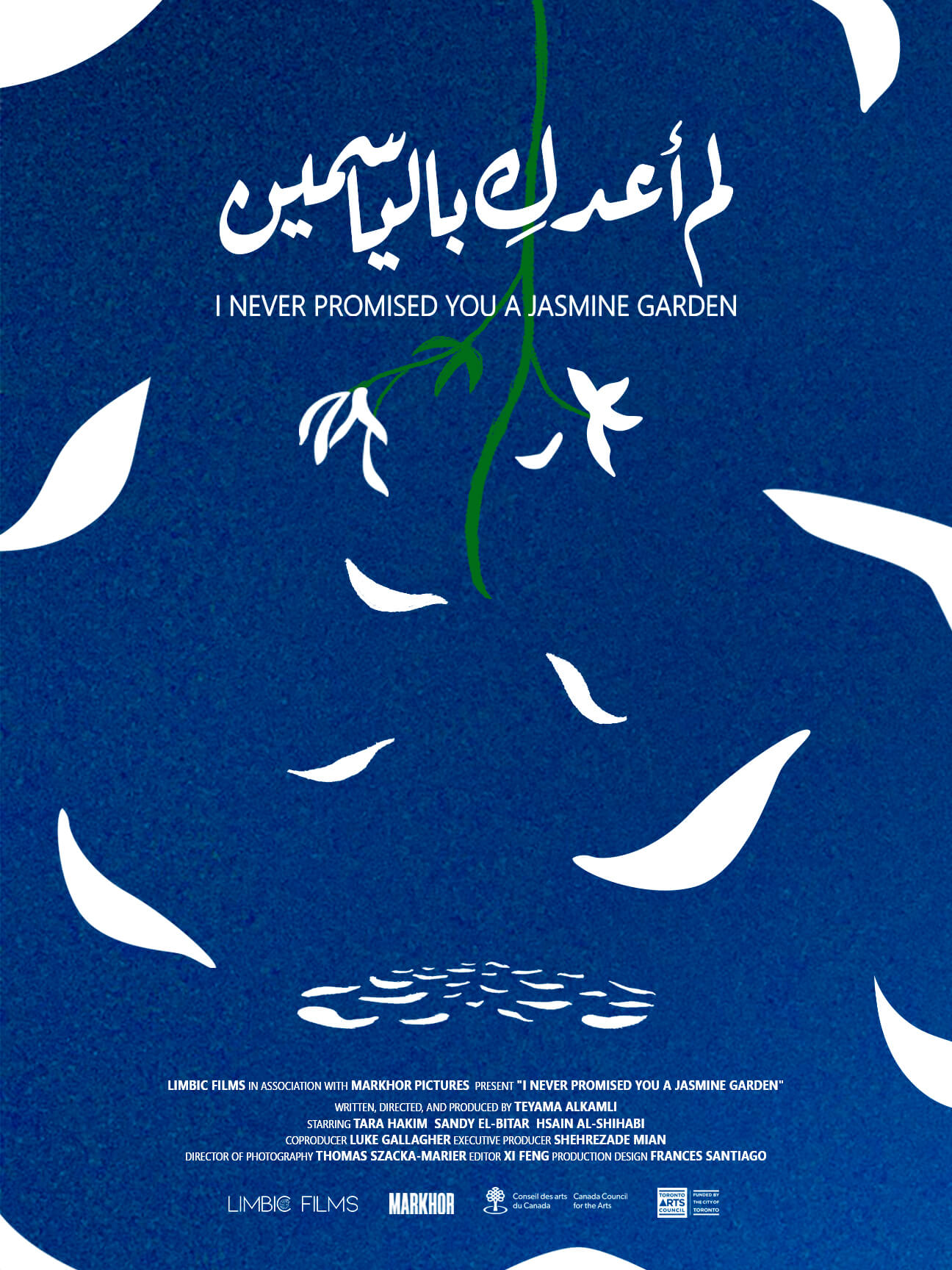
I Never Promised You a Jasmine Garden directed by Teyama Alkamli
Narrative Short – 20 min – Canada
Tara, a queer Palestinian woman in her late 20s, attempts to suppress her internal emotional turbulence during a phone call with her best friend Sarab, with whom she is in love.
About the director, Teyama Alkamli
Teyama Alkamli is an award-winning Syrian-Canadian writer, director, and producer living in Toronto. She is an alumna of DocNomads, the European Mobile Film School, Hot Docs Emerging Filmmaker Lab, the Canadian Film Centre’s Director Lab, and a current TIFF Talent Accelerator participant. Teyama’s film, Hockey Mom, was awarded Best Documentary Program at the 2021 Canadian Screen Awards. Her other works have screened at international film festival such as Doc Lisboa, TIFF, and the Berlinale. She is currently developing her narrative feature debut, My Name is Jala.
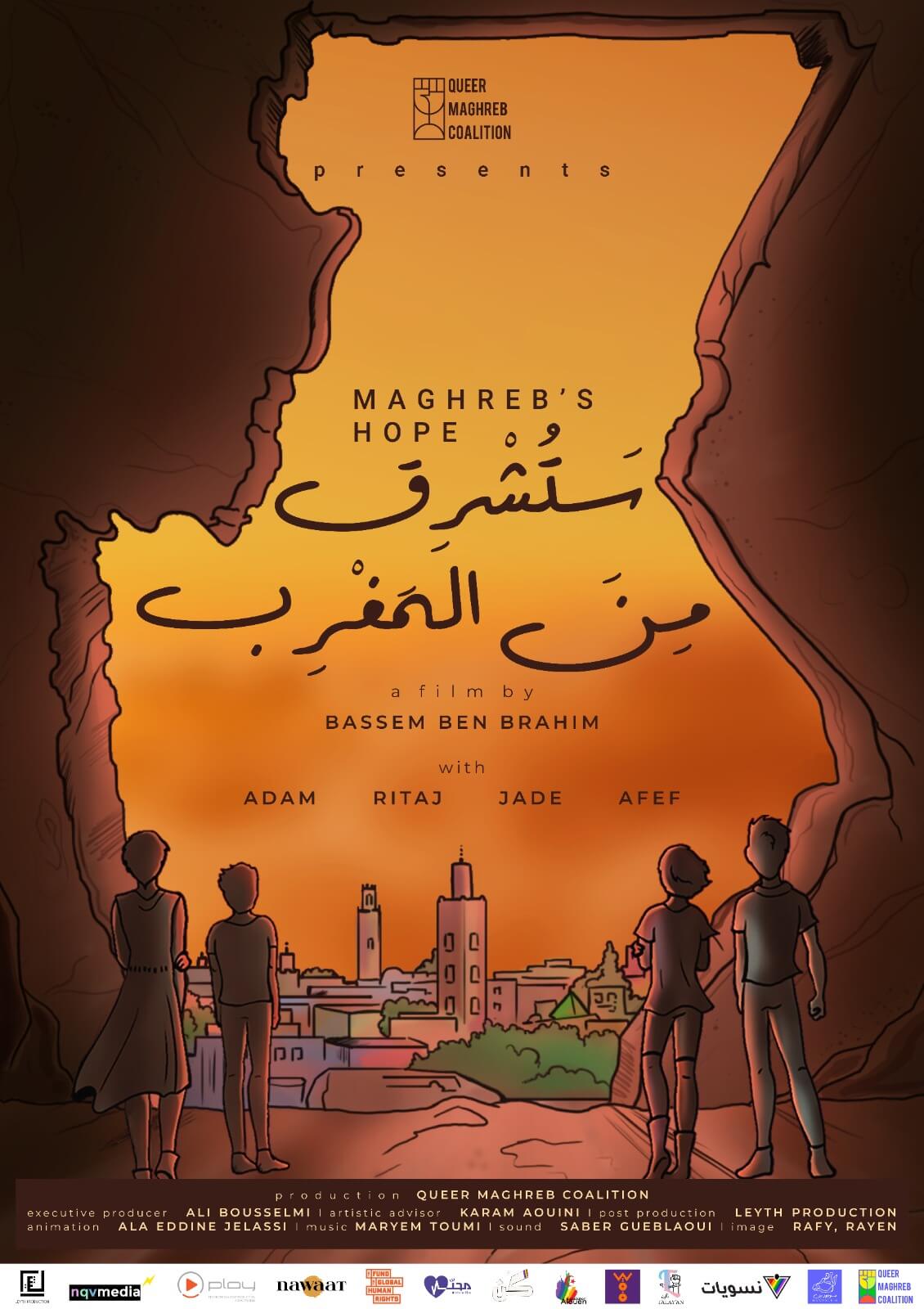
Maghreb’s Hope directed by Bassem Ben Brahim
Documentary Short – 24 min – Algeria, Brazil, Morocco, Tunisia
Queer individuals from the Big Maghreb region share their stories, spanning across their home countries and various locations worldwide.
About the director, Bassem Ben Brahim
Bassem Ben Brahim (She,He) is a Queer film director from Tunisia. Bassem graduated in image design at the Higher Institute of Fine Arts, Nabeul Tunisia. He got his Masters in editing from the School of Audiovisual and Cinema Gammart ESAC. He has directed two animated films; CHROMOPHOBIA and THE RED FISH in 2019 around the issue of gender and sexuality. In 2022 he made his first short documentary NIDHAL which has made various international festivals such as Reeling LGBTQ+ Film Festival; Lovers Film Festival. He is the co-founder of Gender Betounsi, a project on gender culture through the art of animation and painting.
Context
Queer people in Morocco, Algeria, Libya and Tunisia face a hostile and outdated legal arsenal. These laws, inherited from colonization, clearly and explicitly criminalize homosexuality and all non-normative gender expressions.
The penalty can be up to five years’ imprisonment, added to that an invasive anal examination. These North African societies remain homophobic and discriminatory towards the LGBTIQ+ community. The latter faces difficulties in accessing justice, healthcare services, employment and education.
“…Completing the film in such conditions is a source of pride, a metaphor for success in both the art of filmmaking and activism.”
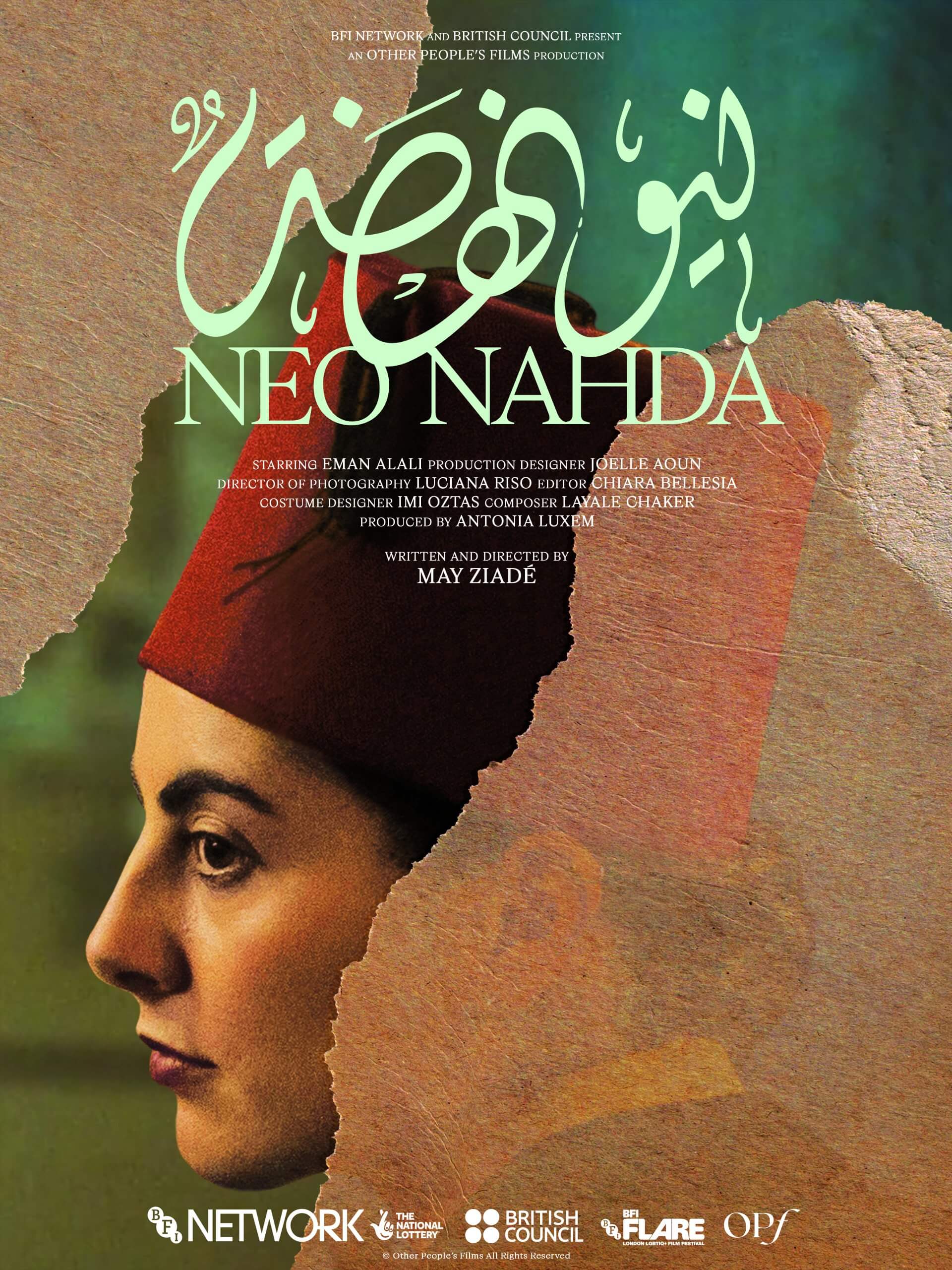
Neo Nahda directed by May Ziade
Narrative short – 12 min – United Kingdom, Lebanon
Mona, a young woman in London, finds archive photographs of Arab women cross-dressing in the 1920s. Somewhere between her fantasies and reality, she starts a feverish journey of uncovering lost histories and her own identity.
Through a coming-of-age narrative, the film explores the euphoric relationship those who are marginalised create with images and symbols, and how archive images can be a portal for the world of inner projections, creating meaning and grounding one’s identity.
About the director, May Ziade
May Ziadé is a London-based French-Lebanese filmmaker, filmworker and the co- founder of Other People’s Films – a production company that produces and creates bridges between moving image work and ‘conventional’ cinema that plays with form. Her work currently focuses on the emotional and physical unfoldings of the societal and cultural pressures to conform.
Her latest short film, NEO NAHDA, tells the story of a young Arab woman in London who becomes obsessed with archive images of women cross-dressing in the Middle East in the 1920s. Since its release in March 2023, it has screened globally including as part of the BFI Flare, MIX CPH, Encounters Film Festival, Safar Film Festival, MENA FF,, and has won a runner-up prize for BEST UK SHORT at the London Short Film Festival in 2024.

Never Stop Shouting directed by Abdellah Taïa
Documentary Short – 10 min – Morocco, France
The writer and filmmaker Abdellah Taia writes a letter to his gay nephew, Brahim, to help him get out of fear, to support him, to walk beside him. To love him strongly.
About the director, Abdellah Taïa
Born in Rabat in 1973, Abdellah Taïa has published several novels with Éditions du Seuil, which have been released in translation in Europe and the United States: The King’s Day (Prix de Flore 2010), Un pays pour mourir (PEN America Literary Awards 2021) and Vivre à ta lumière (2022).
In 2014, he directed his first film, The Salvation Army. Based on his novel of the same name, the film was selected for the Venice Film Festival and the Toronto International Film Festival, and was awarded the Grand Prix at the Angers European First Film Festival as well as the Sundance Institute Global Filmmaking Award.
Queer Lens: The Ties That Bind will screen on October 29th in San Francisco and will also be available online. You can get your tickets here.
For more information about the 28th Arab Film Festival, visit arabfilmfestival.org
A special thank you to our Community Partners:
Queer Women of Color Media Arts Project (QWOCMAP).

GLAAD



Leave A Comment