
The Arab Film and Media Institute’s Creators Program supports emerging Arab and Arab American filmmakers, through fiscal sponsorship, mentorship, and more. Today, we highlight Yara Melki, and her new short film, Alya.
An NYU Tisch alum, the script for Melki’s film was inspired by her upbringing in Lebanon, and something she read as an adolescent learning about life. Alya follows the titular sixteen-year-old in Mount Lebanon as she comes of age and falls in love under her mother’s unyielding gaze. The young girl is pulled between her desires and societal expectations, until she has to face the unforgiving reality of the world around her.
Having played at the Amman International Film Festival, Beirut International Film Festival and the Odense International Film Festival, Alya is a sensitive, intimate work of storytelling that marks Melki as a filmmaker to truly watch for.
We had the chance to correspond with Yara Melki and chat about her film: its origins, the writing, production, casting, her filmmaking inspirations, and more. Here’s what she said.
When did the idea for Alya first come to you?
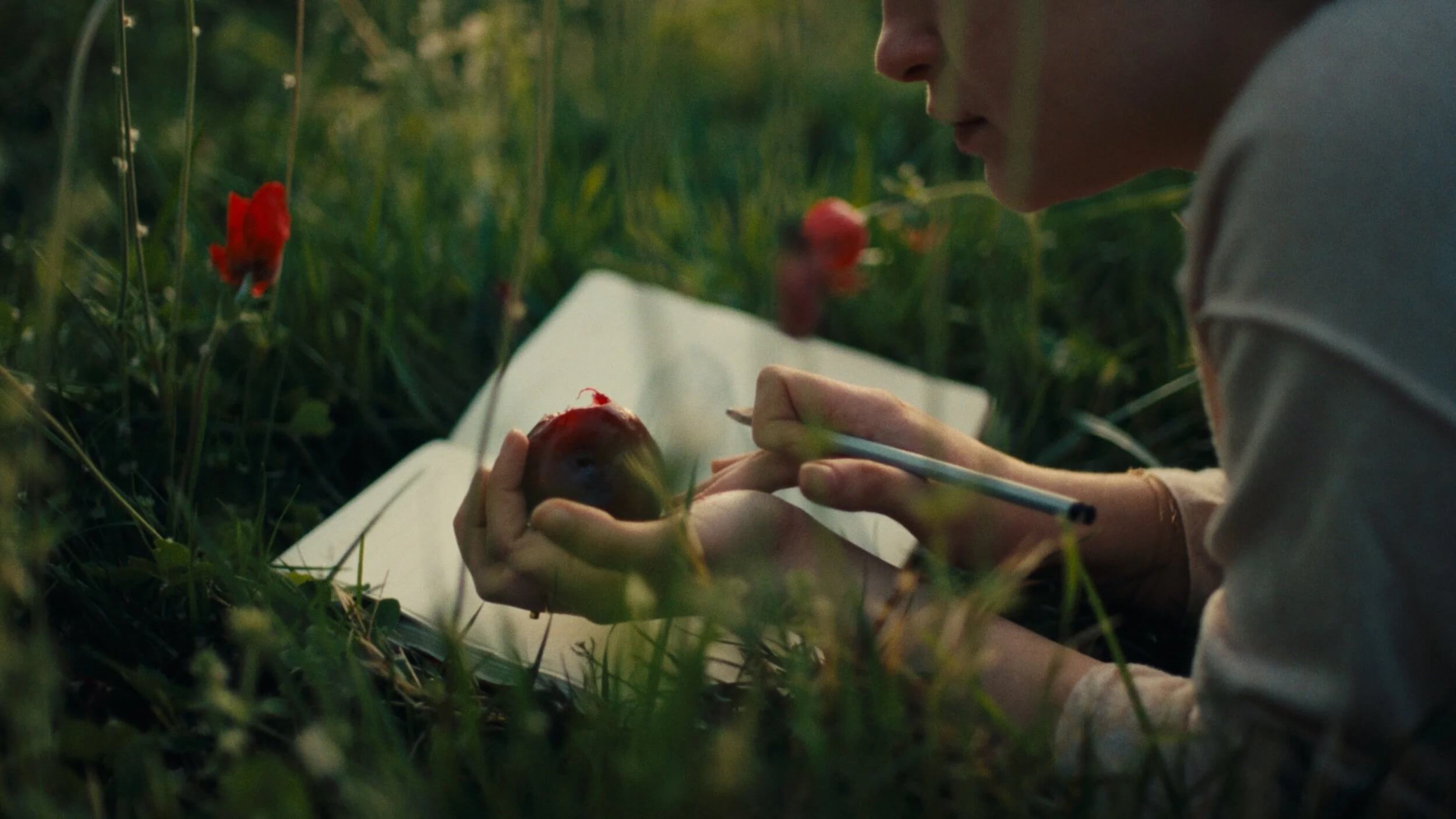
In high school, our biology class was split into two groups for a debate, randomly assigned to argue either for or against abortion. I found myself in the “pro abortion” camp. We were sent home to prepare, and while researching, I came across an article that vividly recounted the testimonies of Lebanese women who had undergone illegal, underground abortions. I went back to that article again and again, and each time a different element would stay with me. There was something about the visceral details of their experiences that I couldn’t shake. I knew I wanted to write something about it.
When I took my first screenwriting class at NYU Tisch School of the Arts, where I was majoring in Film and Television, I was 18 and hadn’t really written a proper screenplay before. I remembered that article and started by writing an abortion scene, drawing on details from the testimonies. From there, I found myself asking questions that were much closer to my own experience: What had it felt like to be a teenage girl in Lebanon? What did it mean to grow and form an identity as a woman there?
Then the story gradually took shape around those questions. What began as a film centered on abortion became a coming-of-age story about first love, sexuality, judgment and growing up, with an abortion at the heart of it rather than defining it entirely.
The story in Alya is a very sensitive one, a bit taboo, as well. How did you go about tackling the subject matter when writing the script?
I wanted to make sure that the abortion scene itself was written as authentically as possible. Beyond drawing from the testimonies in the article I had found, I spoke to several gynecologists in Lebanon about the procedure itself, interviewed someone who had gone through it, and read and watched as much as I could. I wanted the medical and physical reality of that scene to be grounded in real experiences rather than something I had simply imagined.
I also thought long and hard about the circumstances that would lead to Alya’s pregnancy. So often, conversations around abortion turn to extreme circumstances: “What if she was raped?” or “What if it was incest?” Those are horrific realities, but I kept coming back to the question of why a woman’s right to make a decision about her own body has to be justified by tragedy. Why should her choice become less valid if the pregnancy is simply the result of consensual sex?
That led to two things I wanted to explore: Alya’s ability to make a decision about her pregnancy despite arising from consensual sex, and the lack of accessible sexual education for teenagers in Lebanon. Alya and Marwan grow up, like many teenagers do, in environments where sex is taboo and rarely discussed openly. When young people are denied the knowledge and space to understand sex safely, we can’t then expect them to instinctively know how to navigate it.
Both in the writing and later in directing the film, I didn’t want to soften the moments that could make an audience uncomfortable. I knew there might be people who would walk out of a screening or take issue with what was being depicted, and I was okay with that. The reality itself is uncomfortable. If seeing a fictionalized version of it is difficult, I think it’s worth asking what it means that women are actually experiencing it in real life.
Ultimately, Alya is a teenager experimenting with her sexuality who finds herself in a situation she isn’t prepared for. I didn’t want the film to punish her for that. I wanted to question why the structures around her, the ones that leave young people without adequate education while simultaneously policing the consequences, are themselves so quick to punish her.
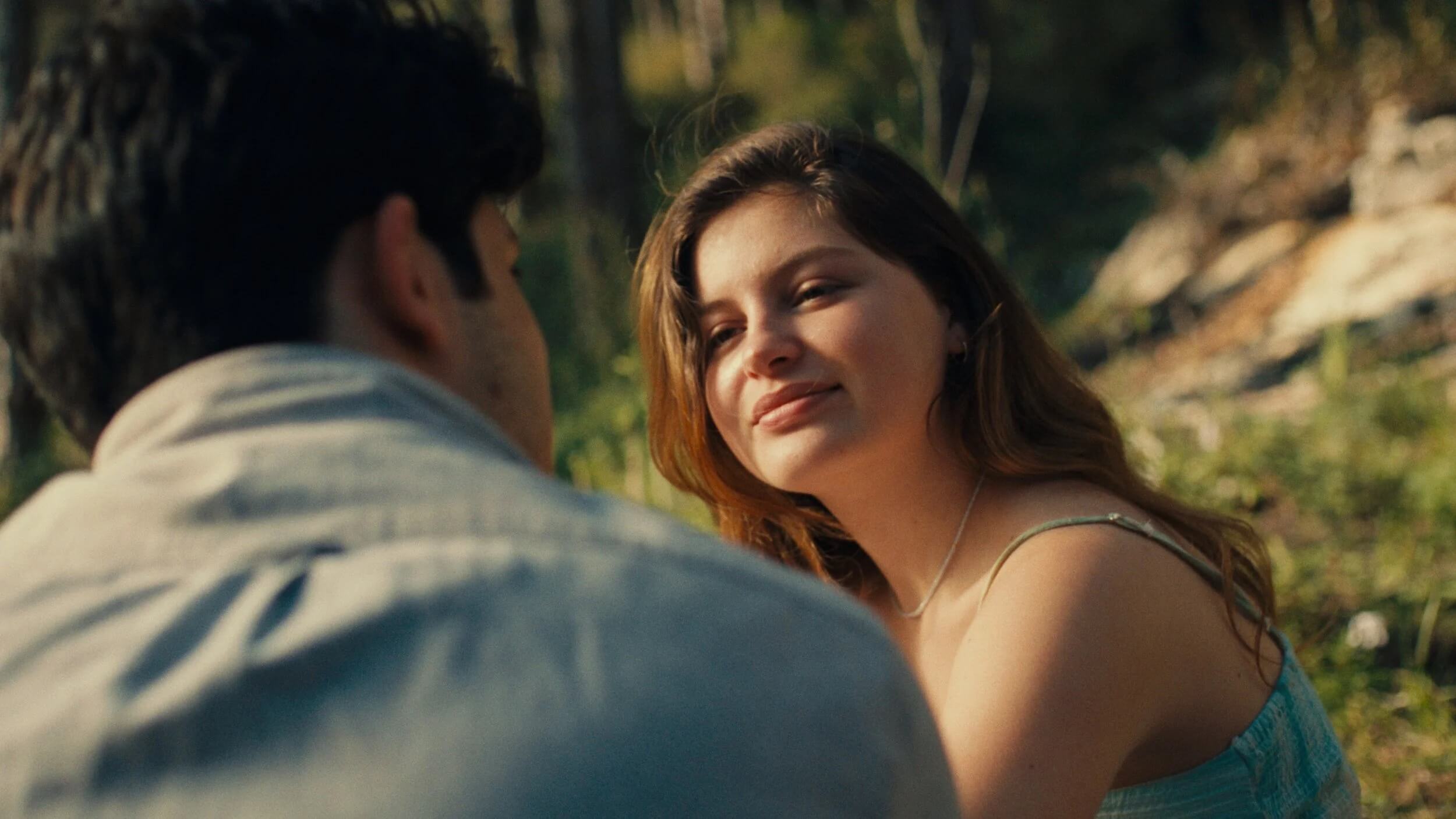
The characters, particularly Alya and Marwan, need to show an intense amount of chemistry and emotion for the short duration of the film. What was the casting process like?
The casting process was really difficult. Both roles asked a lot of the actors, particularly Alya’s, so I was looking for people who could believably have the innocence and uncertainty of teenagers while being slightly older and able to tackle such emotionally vulnerable scenes.
I went through countless auditions and couldn’t find anyone who really moved me. Both Bilal and Joya eventually came to me through recommendations from different people. I remember being sent Bilal’s contact on WhatsApp, clicking on his profile picture and immediately turning my phone to my mum and saying, “That’s my Marwan.”
One of my favorite films is Moonlight, and I remember Barry Jenkins talking about looking for actors who could emote without speaking, and how much of that came through their eyes. I don’t think I fully understood what he meant until I went through this casting process.
When I met Bilal, I understood it. Before I even gave him a scene to try, we sat over coffee and talked about the script for ages. He was incredibly invested, asking countless questions, and seemed to instinctively understand Marwan.
Joya came later, at a point when I was starting to lose hope. I knew that without the right actress, the film simply wouldn’t work; it’s called Alya, after all. A lot of the performances I had seen felt too theatrical for what I wanted. Then my mentor referred me to Joya. We exchanged a few messages and immediately got on a call, and there was something about her that felt completely natural to the character.
Because we were all in different countries, I set up a chemistry read with Joya and Bilal over Zoom. It actually wasn’t romantic at first, it was awkward, and I loved that. They felt like two teenagers meeting for the first time. After we’d talked for a while, I had them try one of the more serious scenes together. At the end of the scene, Bilal improvised a joke to make Joya laugh and soften the moment. It was such a small thing, but that was when I saw Marwan come through and take care of Alya.
That’s when I knew I had them.
What was the most challenging part of the filmmaking process? Writing, producing, directing, editing or something else?
Producing this film was one of the hardest things I’ve ever done. The writing process wasn’t easy either, but I had time to work through different drafts and a lot of support around me. Producing was different. Every time we overcame one hurdle, another seemed to appear.
I left Lebanon when I was 18, so I didn’t have a film network there. That was the first obstacle. I spent months researching and reaching out to one person after another until, two months before the shoot, I found my incredible producer, Farah. Through her, we were able to build the entire crew in Lebanon.
But the biggest challenge was the political situation surrounding Lebanon. We began pre-production in August 2023, only months before the region-defining events of October 7th, 2023. That’s when my professor, Ian Harnarine, sat me down and told me I needed to come up with a Plan B in case shooting in Lebanon became impossible. Those were some of the hardest months for me mentally, with everything happening in Palestine and Lebanon at the same time. But to me, it was either making Alya in Lebanon or making nothing at all. That’s what I told Ian. He never brought up Plan B again and supported me completely through everything that followed.
I spent the next several months working through insurance requirements, monitoring the situation and doing everything I could to make sure we could shoot safely. Eventually, the school gave us the green light, and my cinematographer Cece and I travelled to Lebanon to begin production.
Then, two nights before we were due to start shooting, I received an email saying that the production was no longer permitted to go ahead because of “the regional conflict in the Beirut area.”
I genuinely thought that months of work, money and preparation were about to disappear. I called Ian, and he told me that if I wanted to make the film independently, he would back me. A number of my other professors did the same. So I went ahead independently, shot Alya over five days, and then flew back to New York.
And somehow, that wasn’t the end of it. Post-production became its own journey. In September 2024, I was working with an editor in Lebanon when the war escalated and we could no longer safely commute to the editing suite. The film was essentially stuck for around four months until we were able to retrieve the files from there. I eventually brought them back to New York, but then had to find a new editor. After another few months, I found Adriana, who understood the story immediately and completely elevated the film through the edit.
From the beginning of pre-production to finally completing the film in January 2026, Alya was constantly shaped by circumstances far beyond our control. But I was so lucky to have met such incredible filmmakers and found so much support around me that the thought of not finishing the project never crossed my mind. I felt I owed it to myself and to everyone who had put so much into the film. I think that’s ultimately what I take away from the process: despite everything happening around us, we persevered and made the film.
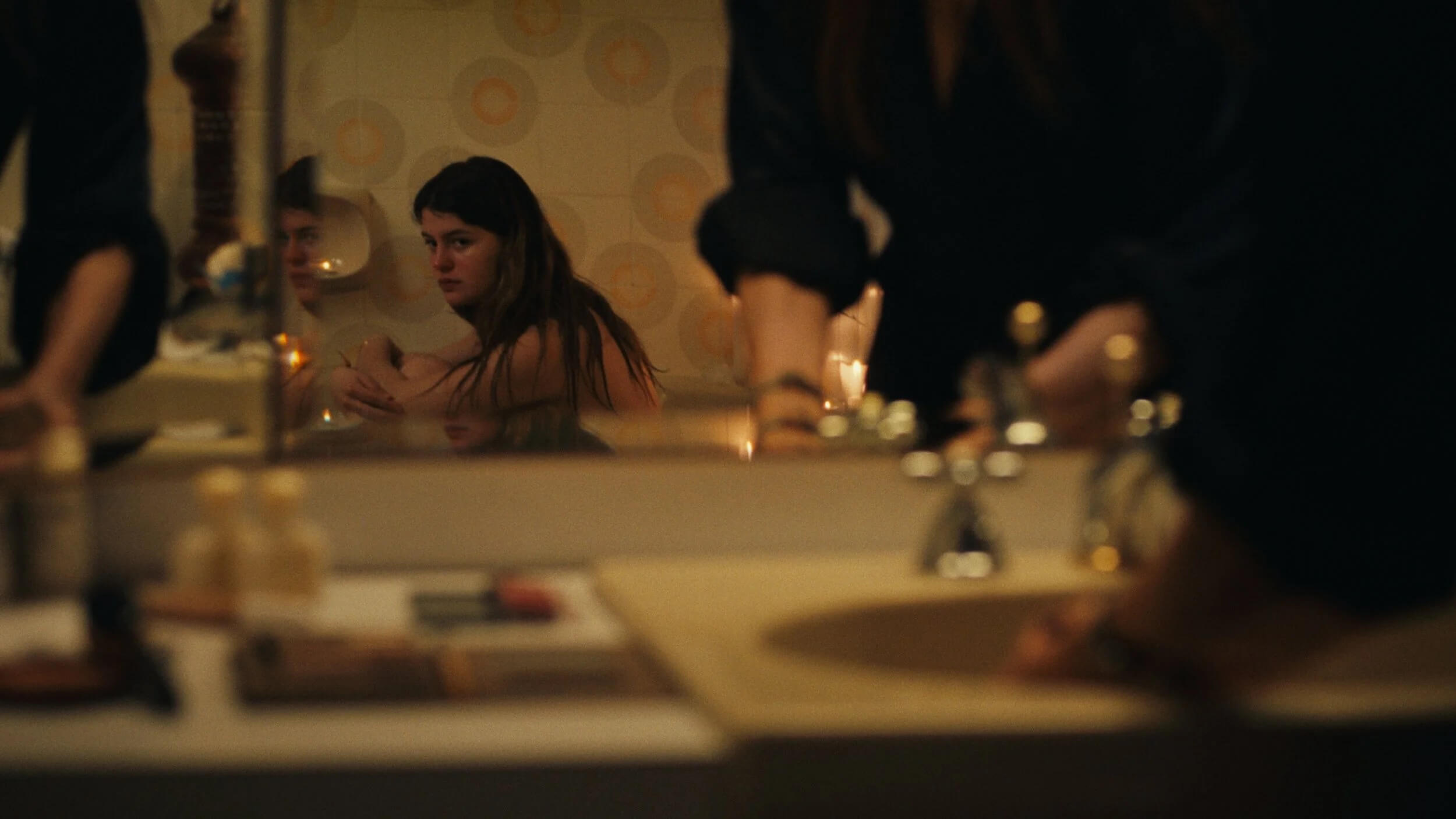
On the cinematography — the lighting and choice of color in the film are very beautiful yet grounding. What were your inspirations for the look of the film?
Collaborating with Cece Chan, my cinematographer, was such a beautiful experience. From the start, we kept coming back to the idea that the film needed to feel real and intimate.
When developing the visual language, one of my biggest references was Deniz Gamze Ergüven’s Mustang. I watched that film countless times and kept coming back to the intimacy of its cinematography and how close the camera feels to the main characters. There is something about the way it captures their faces, bodies and smallest reactions that makes you feel like you’re experiencing the world with them rather than looking at them from the outside. That was something Cece and I thought about a lot with Alya.
A lot of our visual inspiration also came directly from Lebanon and the locations themselves. We were incredibly lucky to shoot much of the film in my grandmother’s house in our village, Ain Ksour. We were surrounded by beautiful natural light, but also by textures and colors that felt inherently Lebanese to me, the stone of the old houses, the carpets, the wood and the greenery. Rather than imposing a visual world onto the location, we wanted to embrace what was already there. At the beginning of the film, the palette is warm, earthy and natural, and Alya feels very much a part of the environment around her.
That intimacy also informed the way we used the camera. In some of the most pivotal moments, we chose to go handheld and get physically closer to Alya, focusing on her face, her hands and small physical details. We wanted the visual language to become more subjective in those moments and capture what she might be sensing rather than simply show what was happening around her.
As Alya’s experience changes, the visual language begins to shift with her. The natural warmth we establish early in the film gives way at certain moments to colder, more clinical lighting, and later the colors become more heightened and less naturalistic. By the end, even that warmth has taken on a different quality, what initially felt comforting begins to feel almost oppressive. We wanted the environments to evolve with Alya’s perception of them, so that familiar spaces no longer necessarily feel familiar.
After going through your catalog, as a director and as a producer, you’re often drawn to narratives about young women navigating a loss of innocence. Why do you think that is?
I think I’ve always been drawn to women-centered stories, though not necessarily specifically to the loss of innocence. But it’s interesting that you describe it that way, because it made me think about what “loss of innocence” actually means to me and in this film. For me, it has much more to do with losing naïveté than losing a so-called purity.
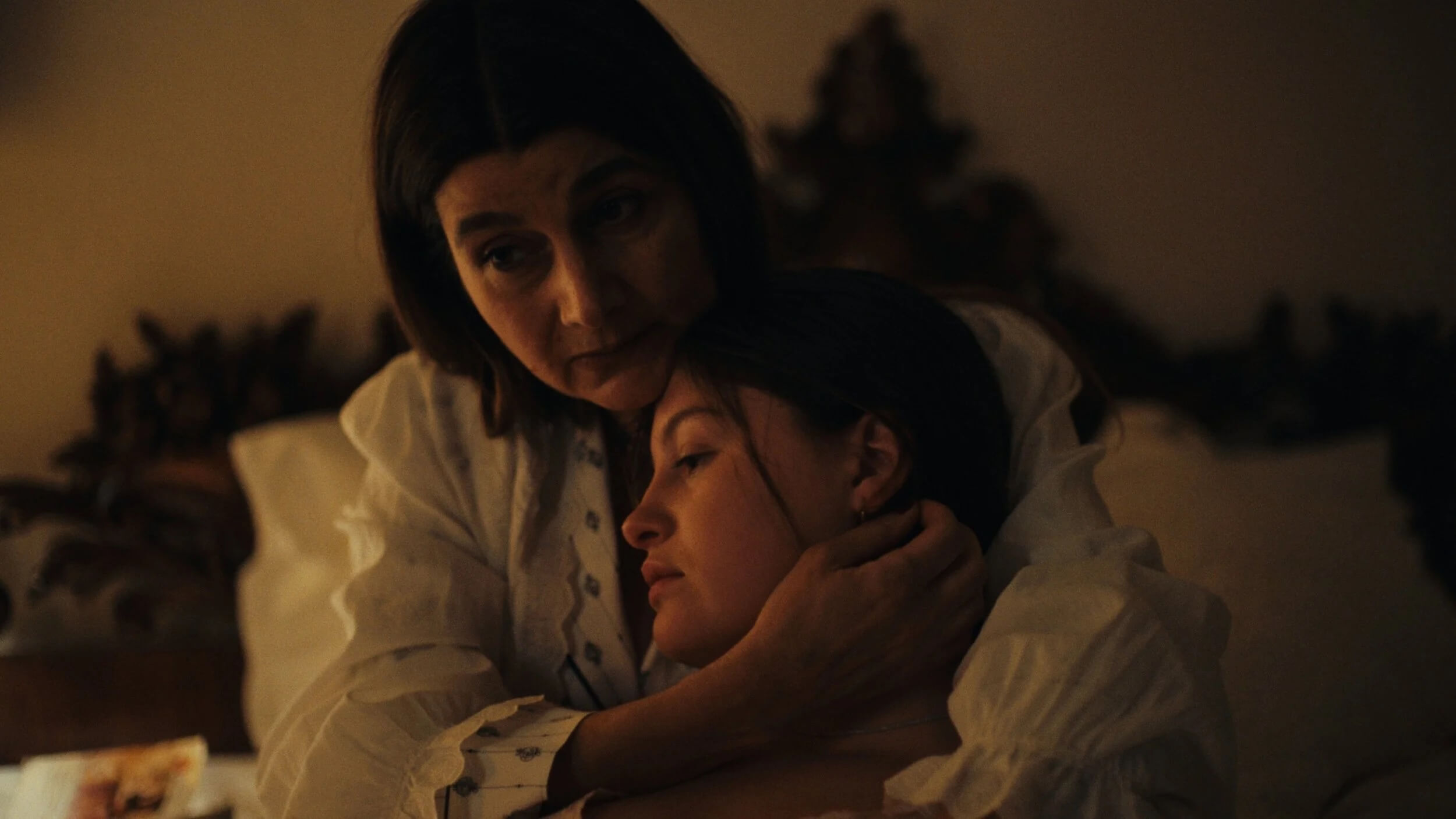
I think it’s important to say that Alya does not lose her innocence because she loses her virginity, nor because she has an abortion. Her innocence comes from the way she understands the world around her. She enters the film with a certain naïveté about intimacy, but also with the assumption that the people and structures around her will ultimately protect her. Instead, she finds herself in an environment that hasn’t prepared her for what she is experiencing and then punishes her for the consequences. She begins to understand that her mother is incapable of connecting with her in the way she needs, and that the world around her isn’t necessarily going to grant her the same innocence it once did.
I think I’m drawn to that particular moment in young women’s lives: when naïveté gives way to awareness. There’s something very fragile about being old enough to start making your own choices, while still discovering the realities and consequences of the world you’re making them in.
Alya is also very indicative of where I was in my own life when I began writing it. The idea materialized when I was 18, straight out of high school, and I think I was going through my own version of that transition. It’s an age where the reality you grew up with starts to fall away and you begin to realize that the world is more complicated, and often less forgiving, than you once thought.
When did you first realize that you were a storyteller? And what landed you on filmmaking?
I always told stories in the most convoluted way. Even as a kid, I could be telling someone a story about running into someone at the park and I would have to start by painting the entire picture, down to every unnecessary detail.
When I was around 12, I started spending my weekends making films on iMovie with my cousins, and I think that’s when I first discovered my love for filmmaking. Coming up with ideas, filming them, editing them together, it all came very naturally to me. I started making films and documentaries at school, entering film festivals, and taking film classes at summer programs whenever I could. It gradually went from something I did for fun to something I became completely consumed by.
Funnily enough, though, I was also in love with medicine, and for a long time I wasn’t completely sure which direction I would take. Right before applying to college, I was accepted into an intensive five-week summer film program at Northwestern University. I spent every day from around 8 a.m. to 10 p.m. in classes and lectures and our weekends making films. I was surrounded by some of the most magical teachers I had ever met. I was exhausted, but completely happy, and I think that was when filmmaking stopped feeling like something I loved doing and started feeling like something I had to dedicate my life to.
Even then, I was still slightly torn. The night I applied to NYU, I had my film application ready and a pre-med application to Northwestern ready as well. I remember thinking about which kind of regret I would rather live with. I realized that I would rather be a filmmaker looking into a doctor’s office wondering whether I should have taken that path than be a doctor looking at a film set and wishing I had chosen filmmaking. So I sent the film application.
What is one thing you’d like for audiences to take away from Alya?
When the screen goes black and the credits roll, I want the audience to sit with the emptiness, fear and loneliness Alya must be feeling in that final moment. It’s very easy to look at someone’s choices from the outside and decide what they should or shouldn’t have done, particularly when it comes to young women and their sexuality. I don’t need everyone who watches the film to agree with every choice Alya makes, but I hope that by experiencing the story through her, they can understand rather than judge her. If the film can make someone question that instinct to judge, even for a moment, then I think it has done what I wanted it to do.
Alya is now screening at film festivals around the world. Learn more about the film and Yara Melki, plus watch the trailer here.



Leave A Comment